Friday, April 15, 2016

What's in the Mystery bag?

    This week in class we focused on artifact bags! This is by far my favorite activity that I have learned in this class. You can use this as a get to know me activity or one to figure out specific events or time periods. It works best in an Inquiry lesson because while going through the bag you are going through the inquiry process. This activity is perfect for any grade level, however it depends on what topic or event you are doing.
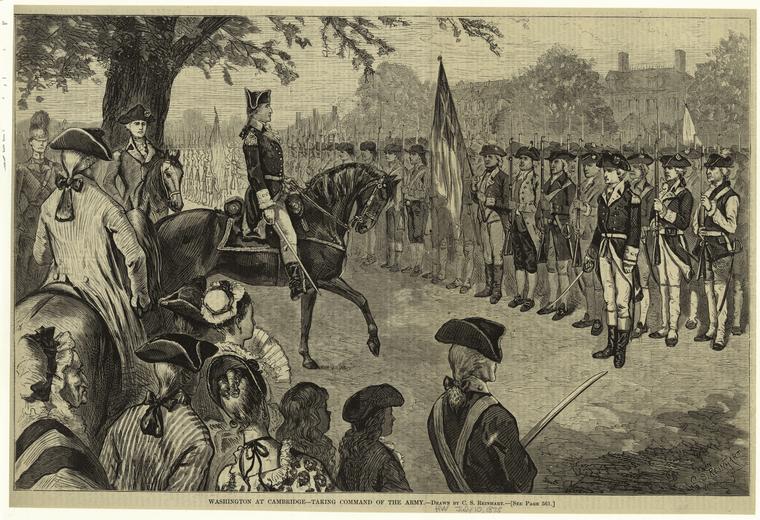
    In class we focused on the lessons we taught in fieldwork. My lessons were about the thirteen colonies so I did mine on George Washington. He was the leader in the American Revolution and played a major role in the road to America's Independence. For my artifact bag I would have second or third grade go through the artifact bag and the inquiry process. I included three artifacts within my bag. The first one was the thirteen colonies flag. I chose this one because George Washington lead them in the Revolutionary War. The next artifact was a picture of the war with George Washington in the front waving the flag. This artifact was very easy and almost guided them in their thinking. The last artifact was a quarter. I chose this one because George Washington is on the quarter and it showed that there is a person on the quarter. I hoped that if that saw that, maybe the bag was on a person and connect the dots.


     Here is the link to my activity presentation. Within the presentation is a link to a autobiography website on George Washington. I chose this website because it gives more in depth information on him and his contribution to the fight for independence. It also gives other important facts and his role has president later on. I also chose the book I Am George Washington by Scholastic. Just like the website it talks about George Washington and his accomplishments throughout his life. This book is more for second grade, which is also the grade level appropriate for my artifact bag. After doing the artifact bag, students would go to the website and book to better inform themselves of George Washington and what he did for this Country. 
     Artifact bags are a great way to challenge the student in the knowledge they gained after a direct lesson. It helps the child learn more about a specific moment in time. I would definitely use this when I become a teacher. It expands the student knowledge and engages them to learn more! 

Here is the link to my presentation on my artifact bag! 

Sunday, April 10, 2016

Primary Sources Vs. Secondary Sources

   While teaching history it is not only important to use sources, but also know the difference in primary and secondary sources. Sources for students in history aid the student in finding out more on the event or time period. It helps them think back to the time when it occurred as well. There is a very significant difference between both types of sources. Primary sources are original documents. They are first hand knowledge on the topic. They are objects or papers that are from that time period. Secondary sources are analyzations documents that discuss the primary document. It interprets the primary source and is second hand knowledge. Below is a picture of some examples of each.


    As a teacher is it best to use primary sources. As said previously these sources would be the documents or object from that time period such as, letters, diaries, and photographs. I believe as a teacher it is best to use original documents. This puts the students mind in that specific time. It also helps to give the students the best examples of what you are trying to teach. 

   On the Library Congress of Learning, they discuss the usage of primary sources and how it is best to use that type of source rather than secondary. They say it is best to use to or three sources within a lesson to help support the students in the given topic. They also give three tips on using the primary sources.

               1. Engage students with primary sources.

               2. Promote student inquiry.            

               3. Assess how students apply critical thinking and analysis skills to primary sources. 

Here is the link to the website if you would like to learn more about primary sources and how they are more useful inside a classroom. 

Below is also a video on primary sources! 


Thursday, April 7, 2016

Say Hello to The Dine Tribe!

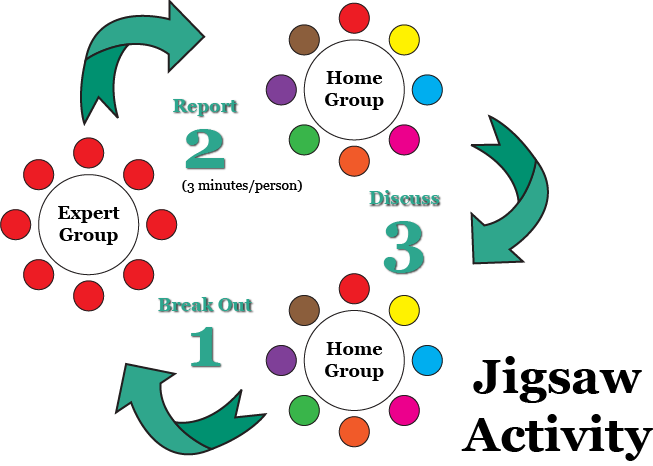
In Social Studies Methods, I learned and practiced the Jigsaw method of teaching. The jigsaw method is a very interactive activity that involves a lot of cooperative learning. It is great for all grade levels, especially grades three through six. Within the jigsaw method you are split up into groups and each person in that group decides on a specific topic. These first groups you would call home groups. Each person in your home group would have a different topic. The students would then separate into smaller groups. Those smaller groups, called expert groups, would do the assignment on the topic he or she had chosen. When you have completed the assignment the students would go back to their home groups and teach the topic to their home groups. The people in the home group would then each present what they have worked on in the second group to their home groups members.

For the jigsaw method we focused on the topic of Native American. Although I am a history major, the topic of Native Americans is one I am least knowledgable about. This activity helped me gain more confidence in the topic. There were four different tribes that the home groups split into. They were the Mohawk/Iroqious, the Dine', the Lakota, the Muskogee, and the Tlingit tribe. For my expert group, I chose to focus on the Dine' tribe and their ways of life. I learned a lot about the Dine' Tribe and how they live by the research I conducted.
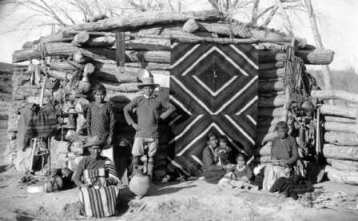
native_american_hogan.jpg

      This lesson was to help us learn about geography and how to teach geography to students. My group and I then looked at the impact the geography surrounding the tribe had their way of life. From learning about the impact it had on specfic group’s life you can see how geography impacts the lives of many people throughout history. For the Dine’ tribe it impacted what food they ate, what they clothes they wore, and how they lived. 

   For my expert group we created a glogster on the Native American tribe. Here is the link to our Glogster! 

Thursday, March 17, 2016

Our time at Fieldwork!

       We finally finished our last day at fieldwork! All four groups presented their three lessons and I can honestly say it was a stressful couple of weeks, but it was very rewarding. I observed and learned so much from not only my group, but my colleagues work as well. My colleagues did a wonderful job in their first time of teaching. They all executed their lessons perfectly. However, there could be some minor improvements, such as the academic language and the  different ways of teaching these lessons. Most importantly our time management. We all in at least one lesson went under or over our time limit.

Lesson Plans
       We learned how to teach direct instruction, which is teaching the students the information. For example, using powerpoint or a prezi. You also will have guided practices that you can do as a class to further extend their knowledge on the topic. The other two lessons, which we did in groups in one hour, are inquiry lesson and the cooperative lesson. In our inquiry lesson, we had student solve a problem, come up with a hypothesis, and find evidence to come to a conclusion. With cooperative, we had students work in groups to do an activity that furthered their knowledge of the given topic. Below are the links to my groups lesson plans for all three lessons!

                                      Direct Lesson

                                                                                   Inquiry Lesson

                                                                              Cooperative Lesson 


Reflections & Observations 
     When observing my colleagues in their groups I watched different kinds of direct, inquiry, and cooperative lessons. I saw ways of teaching that I could use when I student teach and I saw ways that I know not to do. For example, when asking a student a question make sure you ask a couple of students not just one. You could also have the whole  class agree or disagree in many different ways. This helps you as a teacher find out if the hole class understands the topic being taught. I also learned new terms in academic language, such as not to say the word "guys" and use terms such as "boys and girls" or depending on the topic "explorers" or "learners". Not only did this experience help me to learn to better myself as a teacher but also how to work in groups. While observing we were expected to fill out observation reports. These reports helped not only the observers but also the group that presented a time to reflect and also look at what improvements could be made. Below are the links to my observation reports for each group and their lessons, including my own group!

Group 1

Group 2 

Group 3 (my group) 

Group 4 

We as teachers all did an amazing job and cannot wait for new experiences and opportunities to come. This was a great learning experience for me in becoming a teacher and for the rest of my class!

Wednesday, March 16, 2016

Designing assessments

        For our Fieldwork,  we had to design assessments to see what the students already knew and what they did not know. We also assessed the students after fieldwork. Pre-assessment test and post-assessment tests are suppose to see what the student already knows and what the student has learned after the lessons. The pre-assessment help the teacher in finding out how he or she should create their lessons and what information he or she needs to teach their students. The post-assessments helps the teacher in finding out what he or she needs to review or elaborate more on and what the students gained from the lessons.
         When creating the tests it was difficult to come up with the questions to challenge the students. I also found it difficult to make sure, in the pre-assessment, that I did not ask them questions that were on topics that they learned previously. In making these tests you must make sure that the questions are suitable for the grade level that you are teaching and that
they will help you in seeing what the students need to work on and what they do not need to work on. The pre-assessment test helped me and my group members see how we needed to proceed in creating our three lessons. The pre and post assessement will help me in creating my unit plan for this class. It can help me see what lessons I need to make to make sure in the post assessments all the students know the answers and the information.
     Besides pre and post assessments there are other forms of assessments. They are a very important part of learning. They help review, challenge the students knowledge, and give them a better understanding of what they truly know. They also help teachers find out what the students know, don't know, or are struggling with. The three types of assessments: Diagnostic, Formative, and Summative are the main parts to which teachers get that information. There are many ways to act out those three types of assessments to fit the needs of all different types of learners. I for one am excited to put them in action and use them in the field. 

Thursday, March 3, 2016

Last Day of Teaching

We made it through the second day of teaching! Today we taught two lessons, inquiry and
cooperative. Many of the groups struggled with the time management but we managed to fit both lessons into one hour! I thought that was awesome! There were a little bit of spots in our lesson were we could have improved and done differently but has far as getting both lesson plans done in the given amount of time I thought we did pretty well.
For our Inquiry lesson we did artifact bags the students, in groups, were to try and figure out what event they had. Within the bag were clues and documents. For an Inquiry lesson students must have a question that they are suppose to solve, create a hypothesis, and then try to come up with a conclusion or solution to the problem. That is what our Inquiry lesson showed and we used a worksheet to help guide the students through the process.
For our cooperative lesson, we already had the students in their group from the Inquiry so that saved us some time! The whole class created a aromatic poem together and used the word Independence. However, we gave each group a couple of leader so they can decide what word they wanted to use. We created as a class the acrostic poem on a poster board and had the students keep it to hang up in their classroom.
There were some improvements that we could have made to our lesson to make it messed rushed. It was a little rushed when having the students work into groups. We were also less prepared then we were on our direct lesson. I feel the direct lesson went a lot smoother then this one, but over all I thought we did a great job. I am excited to see what the other next group has planned!

Tuesday, March 1, 2016

First day of Teaching


Today my group and I taught our second grade class for the first time today! We taught a Direct lesson on the Colonies and the road to America's independence. At first I was a nervous wreck. I never taught in front of an entire class before. I was used to teaching students one on one. However, my experience today was amazing. Even though I was nervous and scared out of my mind I had a lot of fun. All the students were amazing and all so smart.
Since we were teaching a direct instructional lesson we were directly teaching the students the information within the chapter. We created a powerpoint that we would present to them and created an activity to help further their knowledge. We split the information being taught between the people in our group and I had the pleasure of teaching the students the difference between Loyalists and Patriots. I also told them a story about Paul Revere! We then made a timeline as a class on the road to independence! At the end of the Direct lesson we reviewed to the class what we have learned and asked a couple questions and everyone was able to recall the information!